Large-Loss Response Capability
Trailer-mounted systems and desiccant dehumidification for complex facilities.
Large-loss response for property managers, facility teams, and adjusters across North Georgia. Grady mobilizes engineered drying systems, documents conditions for every stakeholder, and coordinates phased restoration to protect business continuity from first call through verified dry-out.
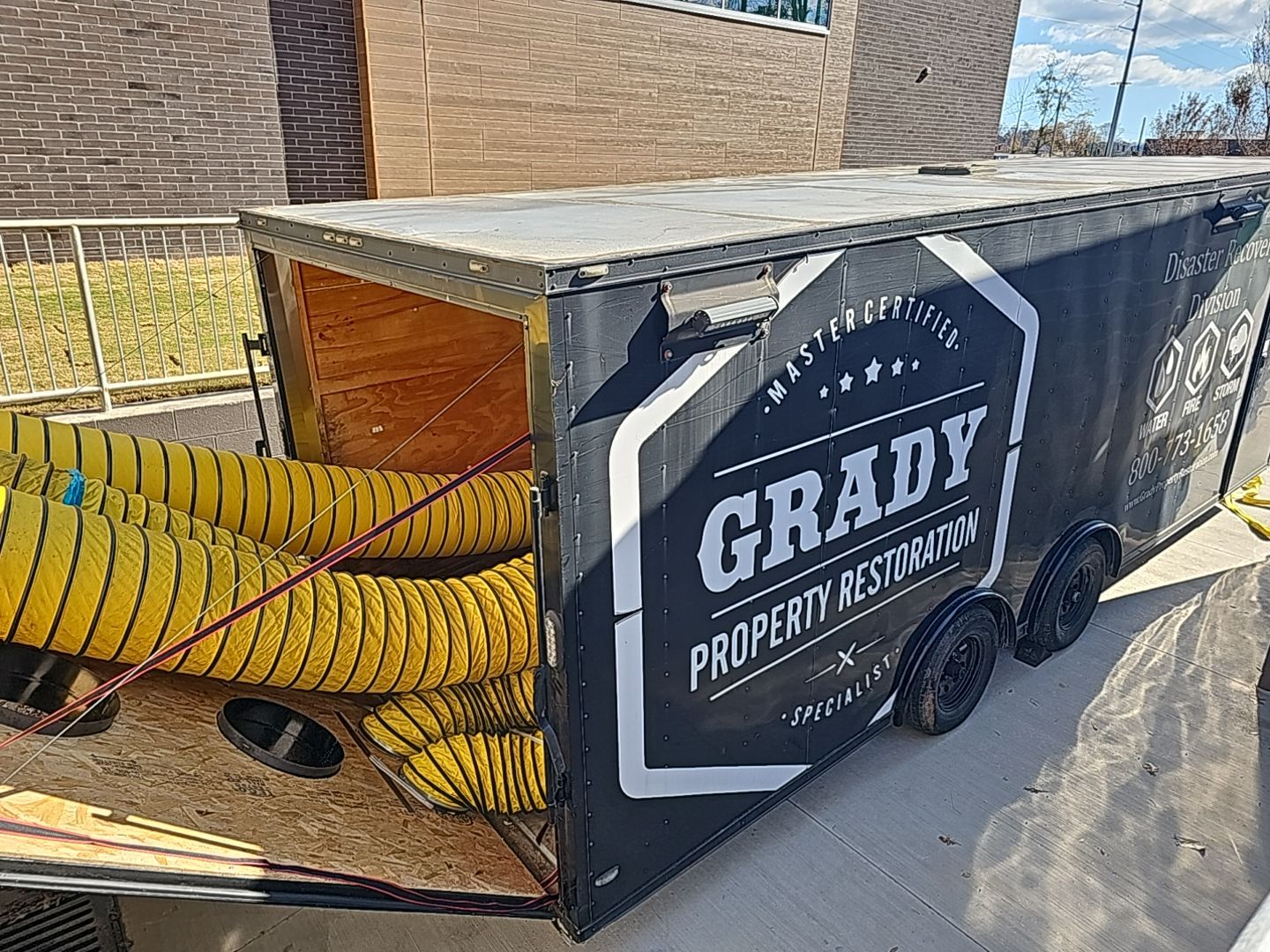
Every hour of downtime costs your operation — mobilization cannot wait until Monday.
Commercial water losses involve multiple stakeholders, occupied spaces, and operational deadlines. You need a restoration partner that coordinates the project — not just places equipment and leaves.
Project Coordination
Single point of contact manages subcontractors, access schedules, and stakeholder updates so facility teams stay informed without chasing status reports.
Large-Loss Equipment
Trailer-mounted drying systems, desiccant dehumidifiers, and temporary power are deployed for warehouse, institutional, and multi-story commercial losses.
After-Hours Response
Sprinkler trips, HVAC riser failures, and weekend storm events are dispatched 24/7 with crews equipped for immediate extraction and stabilization.
Adjuster-Ready Documentation
Moisture maps, daily dry logs, photo records, and Xactimate scope are captured throughout the project — structured for carrier and consultant review.
Phased Restoration Planning
Work zones are sequenced to isolate affected areas, maintain partial operations, and schedule high-disruption tasks during off-hours when possible.
Commercial-Scale Capability
Documented experience on schools, warehouses, healthcare facilities, and multi-tenant buildings — with phased restoration plans built for operational continuity.
Each facility type presents distinct assemblies, occupancy constraints, and documentation requirements. Grady adapts drying strategy and project coordination to the building — not a one-size residential playbook.
Warehouses & Distribution
High-bay racking, concrete slabs, and wide-open floor plates require large-capacity extraction and ducted drying across tens of thousands of square feet.
Retail & Shopping Centers
Anchor tenants, common areas, and back-of-house mechanical spaces each need coordinated access and phased work to keep adjacent stores operational.
Schools & Universities
Classrooms, gymnasiums, and administrative wings require safety protocols, after-hours scheduling, and documentation for district administrators and carriers.
Churches & Worship Facilities
Sanctuaries, fellowship halls, and office wings involve sensitive timelines around services and events — with drying plans built around the calendar.
Healthcare & Medical Offices
Clinical suites, waiting areas, and support spaces demand controlled work zones, infection-control awareness, and minimal disruption to patient operations.
Manufacturing & Industrial
Production floors, equipment pits, and utility corridors require engineered drying that accounts for machinery, coatings, and process downtime costs.
Municipal & Government Buildings
Public-facing facilities with procurement requirements, security protocols, and multi-department occupancy need structured project communication from intake.
Multi-Tenant Office Buildings
Losses spanning multiple suites require tenant notification, lease-area documentation, and coordinated drying across shared mechanical and vertical assemblies.
Commercial water losses are operational events. The goal is drying the building while protecting continuity, documenting every decision, and keeping recovery moving with minimal disruption.
Documented Process
Every commercial loss follows a documented sequence — from scope assessment through verified dry-out and carrier-ready closeout. This is the framework Grady applies on facility water losses across North Georgia.
Loss details, water category, affected square footage, and stakeholder contacts captured. Initial scope and mobilization plan established.
Crews and trailer-mounted systems dispatched with extraction, drying, power, and documentation equipment staged for the facility footprint.
.jpg)
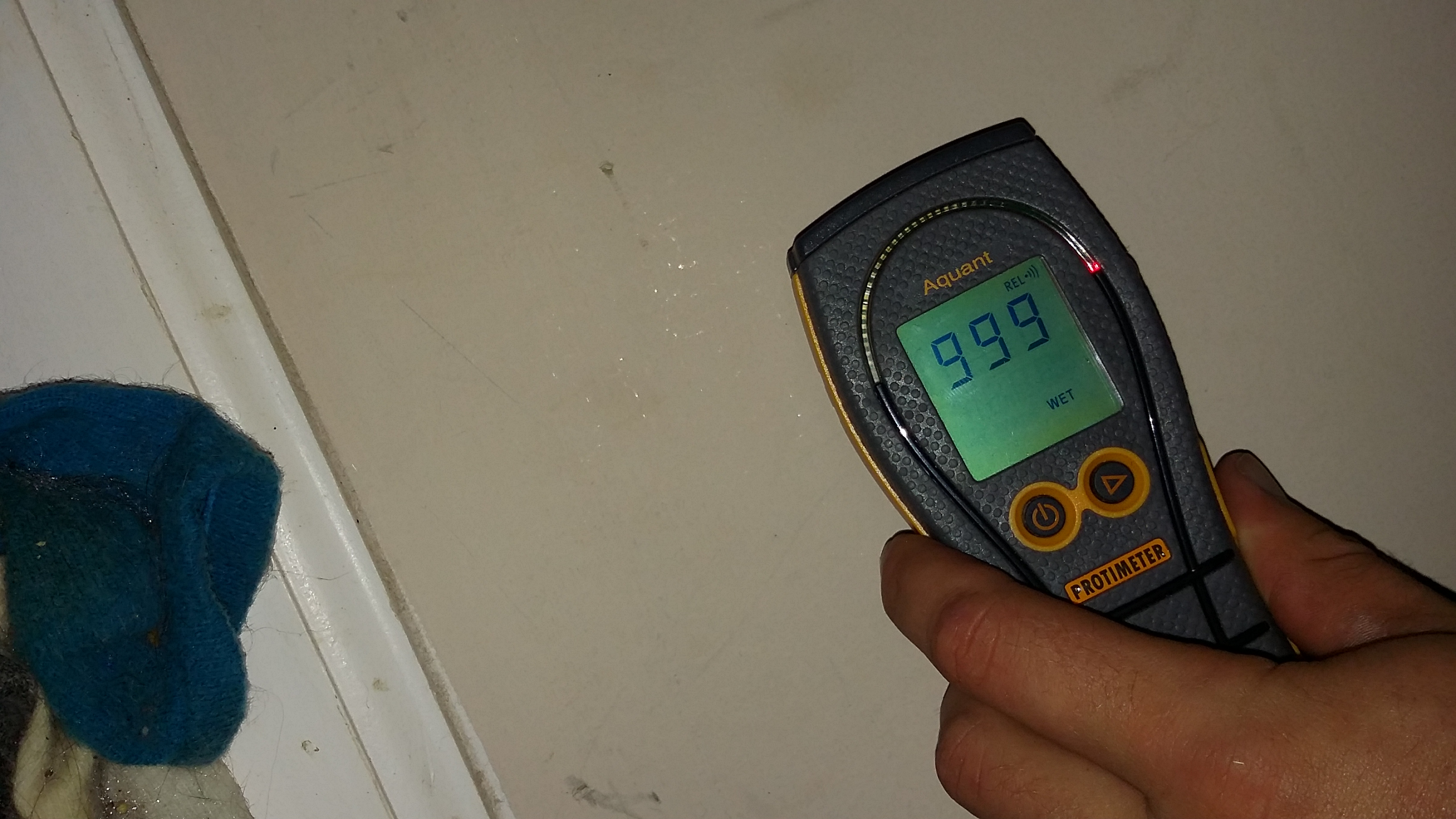
Affected assemblies identified across the facility using moisture meters, thermal imaging, and documented floor plans.
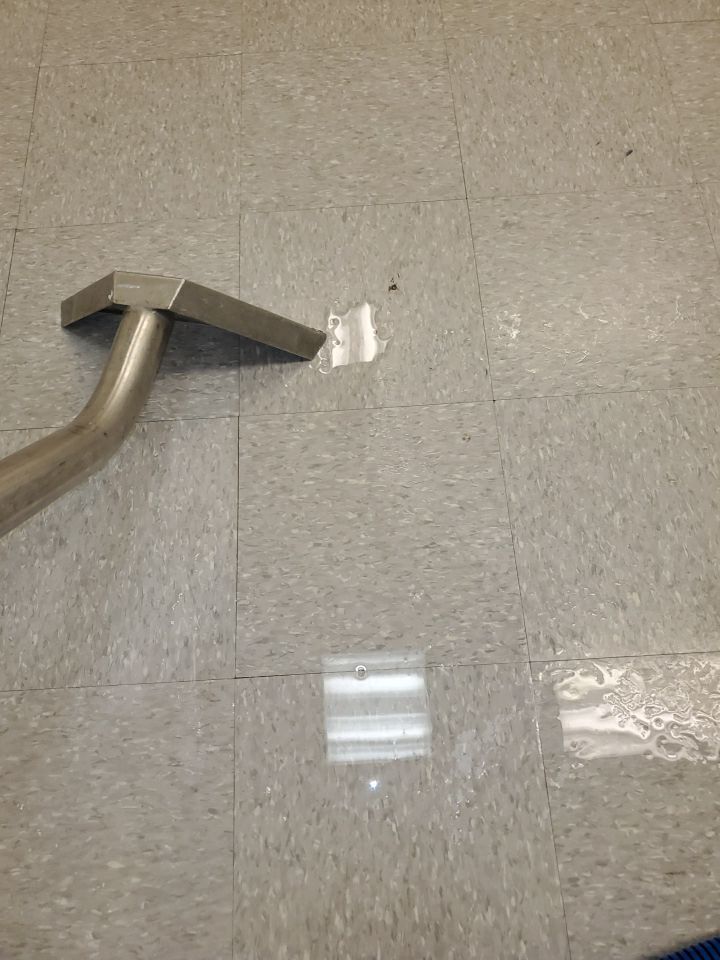
Standing water removed from slab, carpet, and affected assemblies using commercial extractors and pump-out systems scaled to the loss.
Trailer-mounted systems, desiccant dehumidifiers, and air distribution placed per moisture map and facility drying goals.
Moisture readings logged daily. Facility managers, owners, and adjusters receive progress updates aligned to the project schedule.
Phased work zones adjusted as drying progresses. Tenant access, operational windows, and equipment relocation managed to limit downtime.
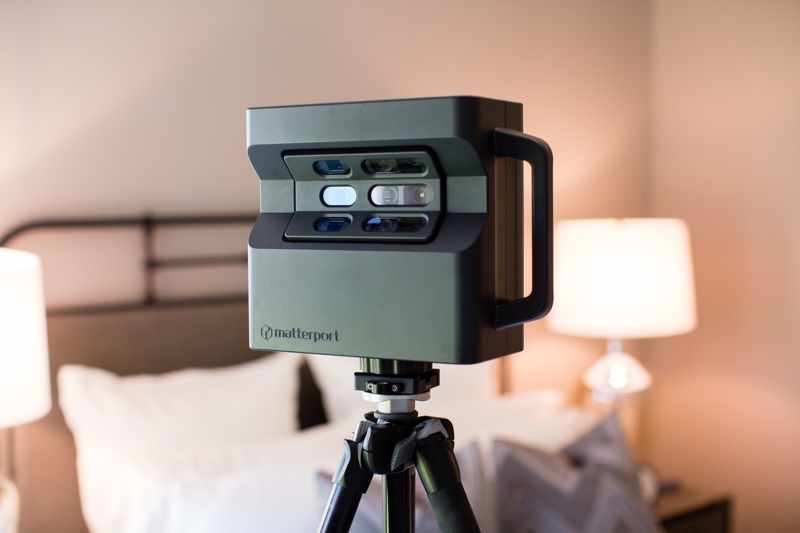
Final dry verification, photo records, drying logs, Matterport capture, and Xactimate scope delivered for carrier and consultant closeout.
Moisture Science
In commercial buildings, water travels through ceiling plenums, demising walls, utility chases, and concealed assemblies long after surface water is extracted. A warehouse slab may read dry while moisture remains trapped in the base of partition walls.
Large-footprint facilities amplify the risk — a single HVAC riser failure can affect multiple floors and tenant suites before the full extent is visible. Without assembly-level moisture mapping, drying scope is underestimated and secondary damage follows.
Grady surveys affected assemblies on arrival, monitors readings daily across the facility footprint, and reports progress to every stakeholder until verified dry-out is achieved.
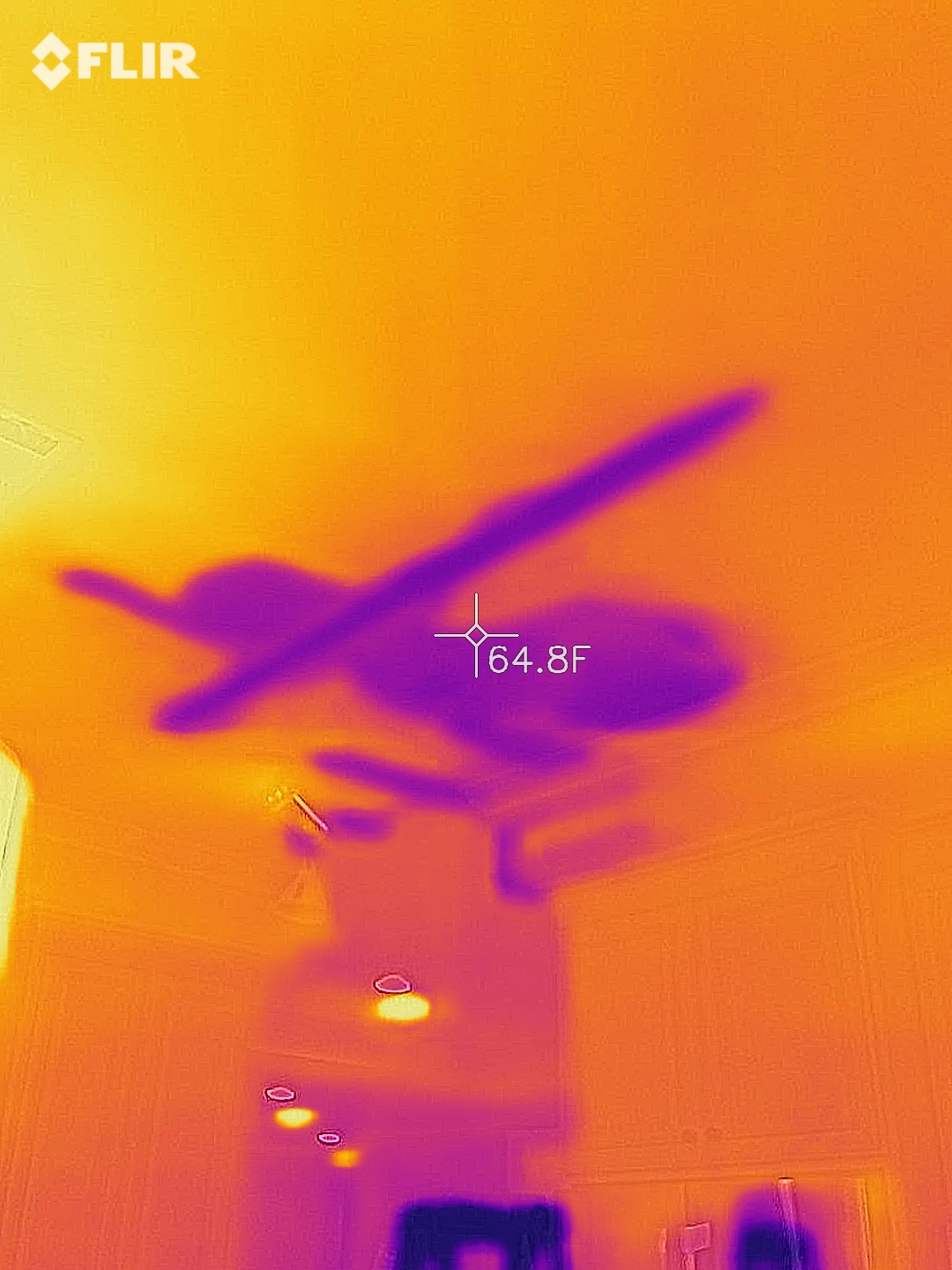
Assembly Moisture Survey
Documents moisture in walls, ceilings, and floor systems before drying equipment is placed.
Large-Area Thermal Imaging
Identifies temperature anomalies across wide commercial floor plates and multi-story assemblies.
Daily Dry Logs
Equipment performance, ambient conditions, and material readings tracked against drying goals.
Stakeholder Reporting
Progress summaries formatted for facility managers, owners, adjusters, and consultants.
Operations Planning
Commercial water damage is not just a building problem. It affects tenants, employees, operations, revenue, safety, and access. Grady develops drying plans that help stabilize the loss while reducing unnecessary interruption to the business.
Occupied Buildings
Drying plans can be phased around occupied spaces when conditions allow, helping businesses continue operating while affected areas are controlled.
Night & Weekend Work
When access during business hours is limited, restoration work can be scheduled after hours to reduce disruption.
Tenant Coordination
Apartment communities, offices, and retail centers require clear communication so tenants understand what is happening and what areas are affected.
Temporary Barriers
Containment, temporary partitions, and controlled access help separate affected work zones from active areas of the property.
Facility Communication
Property managers and facility teams need consistent updates, documented progress, and a clear plan for the next phase of work.
Noise & Access Planning
Equipment placement, traffic flow, access routes, and noise concerns are considered so drying operations fit the realities of the building.
Proactive Planning
Preparation before the emergency is often the difference between hours of disruption and days of downtime.
Facility Risk Assessment
Grady evaluates your property’s vulnerability to water intrusion, equipment failure points, and operational exposure before a loss occurs. Assessment findings inform response priorities so your team knows where risk concentrates when an emergency happens.
Matterport Digital Building Documentation
A Matterport scan captures your facility’s layout, assemblies, and critical areas in immersive 3D before damage complicates access. Pre-loss documentation accelerates scope development and reduces guesswork during the first hours of a commercial water event.
Emergency Utility Mapping
Shutoffs, electrical panels, HVAC zones, and critical infrastructure are identified and documented in advance. When water enters the building, facility teams and Grady crews know exactly where to isolate systems without searching under pressure.
Custom Response Procedures
Property-specific protocols define who to call, how access works, and what operational priorities apply at your site. Custom procedures replace generic emergency checklists with a plan built for your building, tenants, and staff.
Priority Emergency Dispatch
Enrolled properties receive prioritized mobilization when a water loss occurs — crews arrive with facility context already on file. Priority dispatch reduces intake time and accelerates the path from emergency call to stabilization.
Annual Plan Review
Facilities change — tenants turnover, systems are upgraded, and floor plans shift. Annual review keeps your ResponseReady file current so documentation and procedures reflect the building as it exists today.
Claims Support
Commercial claims involve carriers, consultants, owners, and tenants — each requiring a clear, defensible record. Grady builds that record from intake, not at closeout.
Tenant Impact Reports
Suite-by-suite documentation of affected areas, access restrictions, and business interruption scope for multi-tenant properties.
Business Interruption Records
Operational downtime, phased work schedules, and equipment impact logged for BI claim support.
Multi-Zone Moisture Logs
Daily readings across building zones compared against material dry standards for large-footprint losses.
Matterport Facility Capture
Immersive 3D documentation for large commercial layouts, pre-existing conditions, and scope verification.
Xactimate Commercial Estimates
Line-item scope aligned with documented conditions, equipment deployment, and commercial pricing structures.
Adjuster & Consultant Coordination
Direct communication with carrier representatives and third-party consultants to resolve scope questions promptly.
Need documentation support on an active commercial loss?
Call 800-773-1658Claims Education
Commercial water claims are reviewed by adjusters, building consultants, and ownership groups — often simultaneously. Each stakeholder needs the same defensible record: what was wet, what was done, and when dry standard was verified.
Grady captures that record throughout the project. Scope disputes, BI questions, and tenant allocation issues are resolved faster when documentation is complete from day one.
Field Documentation
Every commercial facility presents distinct constraints — occupancy, assembly types, and stakeholder requirements. Explore documented projects to see how Grady applies engineered drying, phased coordination, and carrier-ready documentation on North Georgia commercial losses.
Commercial losses originate from building systems, tenant improvements, and envelope failures — each producing a distinct damage pattern and documentation requirement.
Sprinkler Discharge
A single head activation or line break releases hundreds of gallons across open floor plates, racking aisles, and finished tenant spaces within minutes.
Learn MoreHVAC Riser Failure
Condensate line breaks and chilled-water riser leaks travel vertically through ceiling plenums, affecting multiple floors and tenant suites before visible staining appears.
Learn MoreRoof Membrane Failure
Membrane breaches and flashing failures allow water into insulation and deck assemblies across large commercial roof areas — often undetected until interior damage surfaces.
Learn MoreTenant Plumbing Failure
Restroom supply lines, break-room connections, and tenant improvement plumbing fail within leased suites — with water migrating into common areas and adjacent tenants.
Learn MoreFire Suppression Activation
Pre-action and wet-pipe system discharges saturate ceilings, walls, and contents across occupied commercial spaces — requiring immediate extraction and scope documentation.
Learn MoreGrease / Water Crossover
Commercial kitchen grease interceptor failures and drain line crossovers introduce contaminated water into food-service areas and adjacent tenant spaces.
Learn MoreFoundation Intrusion
Groundwater and hydrostatic pressure breach slab edges and foundation walls in below-grade commercial spaces — requiring pump-out and long-duration drying protocols.
Learn MoreStorm Roof Breach
Wind-driven rain penetrates compromised roof sections during severe weather events — saturating insulation, deck assemblies, and interior finishes across large roof areas.
Learn MoreCommercial water losses demand engineered systems — not residential equipment scaled up without a plan. Every facility is evaluated for drying strategy, power requirements, air distribution, and project coordination before deployment.
Trailer-Mounted Systems
Trailer-Mounted Drying Systems
Self-contained drying trailers deliver heated, dehumidified air through duct networks across warehouse floor plates, gymnasiums, and large open commercial spaces where portable equipment cannot reach effective capacity.
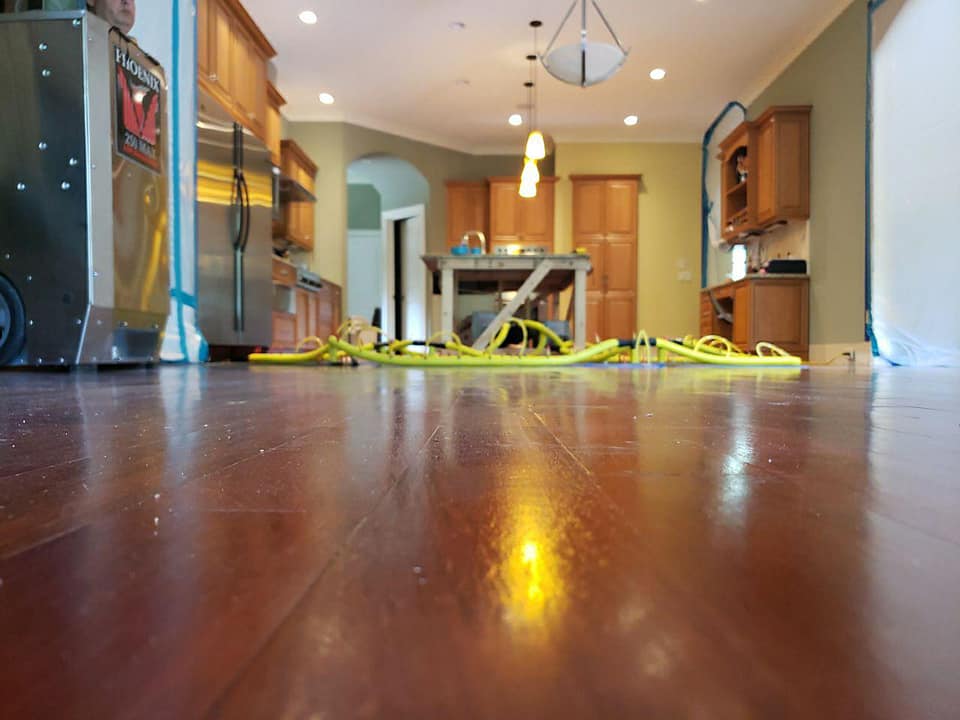
Desiccant Technology
Desiccant Dehumidification
Desiccant systems achieve lower grain depression than LGR units — critical for large-volume commercial spaces, low-temperature environments, and losses requiring aggressive moisture removal rates.
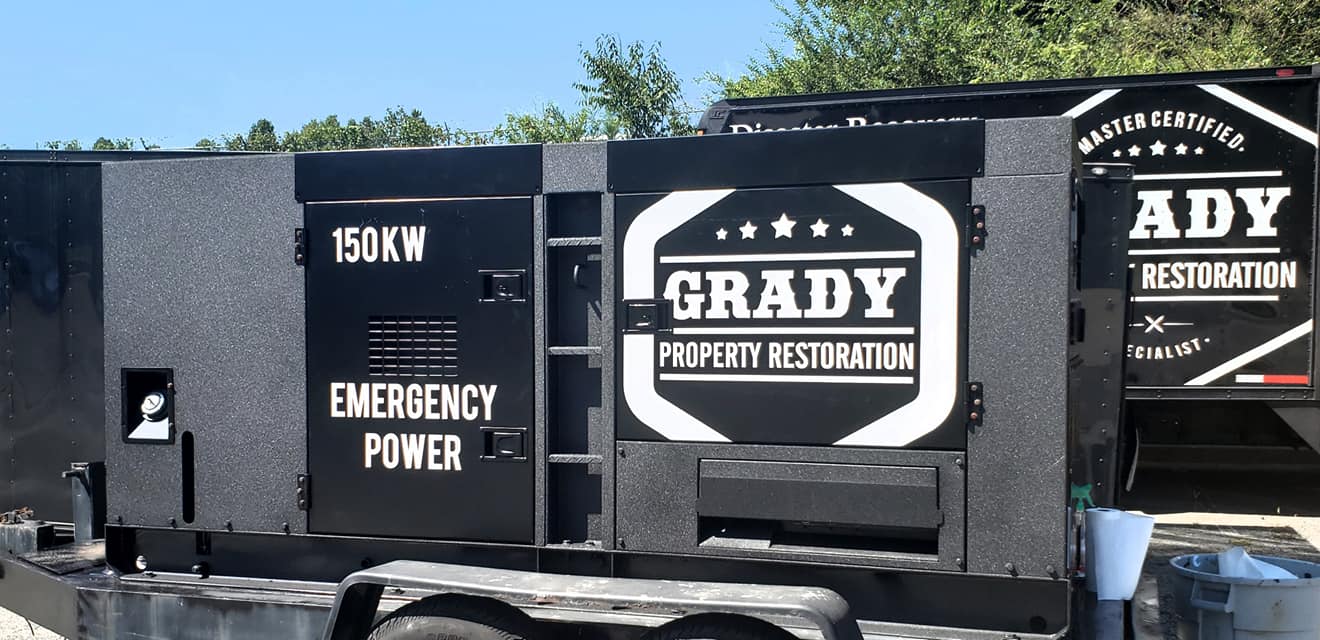
Emergency Power
150KW Emergency Power
Trailer-mounted and towable generator systems provide temporary three-phase power for desiccant units, drying trailers, and high-capacity air handlers when facility power is unavailable or insufficient.
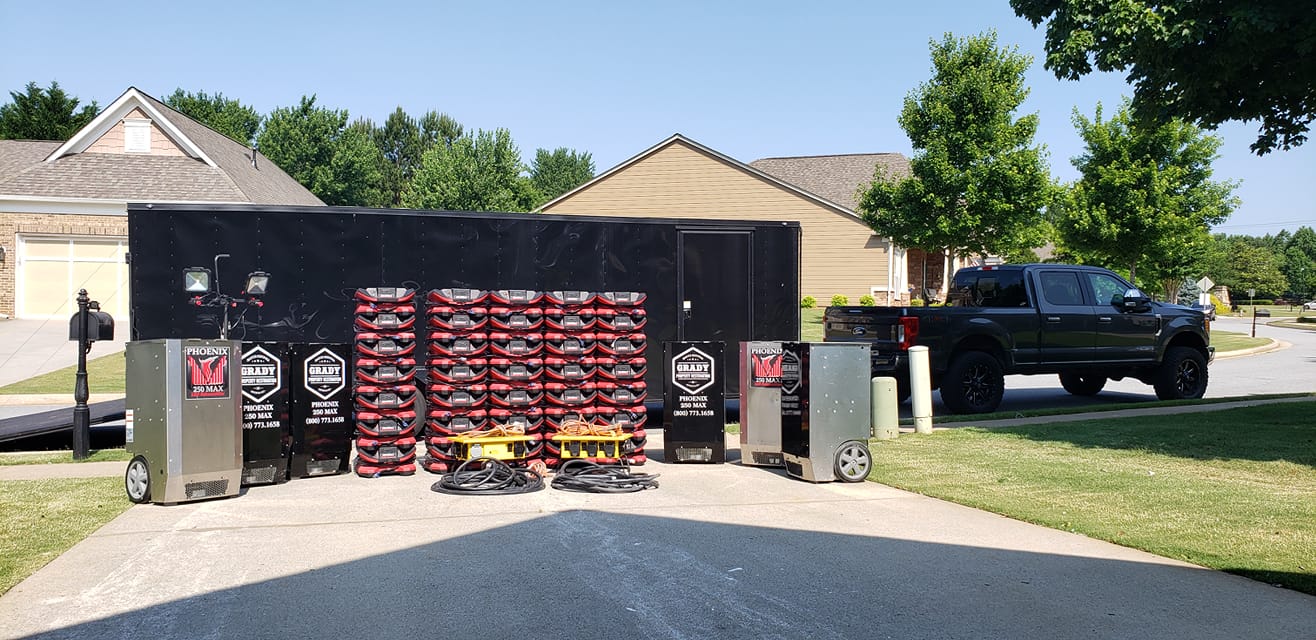
Air Distribution
Large-Capacity Air Distribution
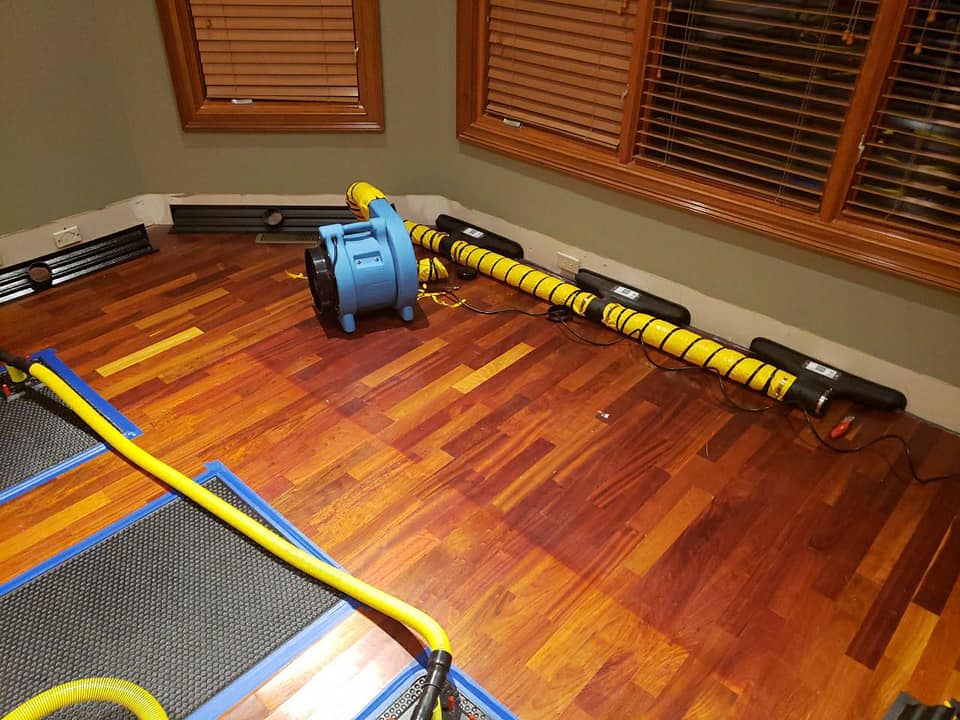
Duct networks, axial fans, and commercial air movers distribute conditioned air across wide floor plates — maintaining airflow velocity and coverage required for effective structural drying at scale.
Project Management
Project Management & Coordination
Dedicated project leadership coordinates access, tenant communication, subcontractor scheduling, and stakeholder reporting throughout the commercial loss — keeping facility teams informed without managing the restoration themselves.
Environmental Control
Engineered Drying Chambers
Containment barriers and environmental chambers isolate affected zones within occupied buildings — concentrating drying energy where it is needed while maintaining operations in adjacent areas.
Remote Monitoring
Moisture Monitoring Networks
Bluetooth and LTE-connected sensors track equipment performance, ambient conditions, and moisture trends across large facilities — providing data between scheduled site visits and alerting teams to anomalies.
Claims Documentation
Xactimate & Scope Documentation
Industry-standard estimates, photo records, and 3D capture are produced throughout the project — giving adjusters and consultants the scope detail commercial claims require from intake through closeout.
Restoration Planning
Multi-Phase Restoration Planning
Complex commercial losses are sequenced into defined phases — extraction, structural drying, selective demolition, and rebuild coordination — with each phase documented and scheduled around operational requirements.
Complex Environments
Some commercial structures cannot be dried with standard equipment placement alone. Complex materials, assemblies, and operating environments require specialty drying methods matched to the building.
Gymnasium Floors
Wood athletic flooring requires careful drying strategy to control moisture movement, reduce cupping risk, and protect the floor assembly.
Bowling Alleys
Bowling lanes and subfloor assemblies require specialized evaluation because trapped moisture can affect alignment, adhesives, and long-term performance.
Churches & Assembly Spaces
Large open rooms, elevated ceilings, platforms, pews, and specialty finishes often require engineered air movement and humidity control.
Libraries & Archives
Books, documents, shelving, and interior finishes require a more controlled drying environment to limit secondary damage.
Healthcare Facilities
Healthcare environments require attention to safety, containment, access control, and coordination with facility protocols.
Mechanical Rooms
Water losses in mechanical spaces can involve equipment, electrical concerns, confined access, and complex drying logistics.
Server & Technology Rooms
Technology spaces require careful coordination, moisture control, and documentation to protect sensitive equipment and business operations.
Historic Structures
Older buildings often include plaster, hardwood, masonry, and specialty finishes that require a preservation-focused drying approach.
When a commercial water loss occurs, response time and mobilization capacity matter. Grady Property Restoration deploys large-loss drying systems, extraction crews, and documentation teams across Cumming, Forsyth County, and surrounding North Georgia commercial markets.
Don’t see your market? Call us — large-loss crews may still be available depending on facility size and location.
Yes. Grady maintains 24/7 large-loss dispatch for commercial properties. After-hours events — sprinkler discharges, HVAC failures, and storm intrusions — are mobilized with extraction, drying, and documentation crews regardless of when the loss occurs.
We work directly with property management to establish access protocols, phased work zones, and tenant communication schedules. Equipment placement, noise windows, and business-hour restrictions are planned upfront to limit operational disruption across occupied suites.
Yes. Grady deploys trailer-mounted drying systems, desiccant dehumidification, temporary power, and high-capacity air distribution for warehouses, schools, healthcare facilities, manufacturing plants, and other large-footprint structures.
Every commercial project includes date-stamped photos, moisture mapping, daily dry logs, equipment run records, Matterport capture when scope requires it, and Xactimate estimates aligned with documented conditions. Reports are structured for adjuster and third-party consultant review.
We develop phased restoration plans that isolate affected zones, maintain partial operations where feasible, and schedule high-disruption work during off-hours or shutdown windows. Business continuity coordination is built into the project plan from intake.
Yes. Grady has experience with institutional properties including K-12 schools, universities, worship facilities, and government buildings. We coordinate with administrators, safety officers, and facility staff to meet access, occupancy, and documentation requirements.
Yes. Grady responds to commercial water losses across Cumming, Forsyth County, and North Georgia including Alpharetta, Johns Creek, Roswell, Dawsonville, Canton, Suwanee, and surrounding markets.
Call Grady for large-loss mobilization, engineered drying, and stakeholder documentation.